Blog
States use funding formulas to decide how public education dollars are allocated to school districts. These formulas determine how much funding districts receive and what resources they can provide to students.
In this post, we focus on the base funding formulas states use to allocate most education dollars to districts. We explain the three most common approaches—student‑based, resource‑based, and hybrid models—and use a simple field‑trip analogy to show how each model works in practice. We also note where states vary from these approaches and how supplemental funding fits alongside, but separate from, the base formula.
The base funding formula determines how the state distributes core education funding to districts. Supplemental funding is layered on top of that base formula to provide additional resources for students or districts with higher needs.
Using our field‑trip analogy, base funding is what the state pays for each student to go on the trip, while supplemental funding is how the state helps ensure every student can fully participate and benefit from the trip, no matter where they are coming from. (You can read more about supplemental funding here.)
You can explore what each state does on our State PK–12 Finance Map and read more below.
Student-Based Funding Model
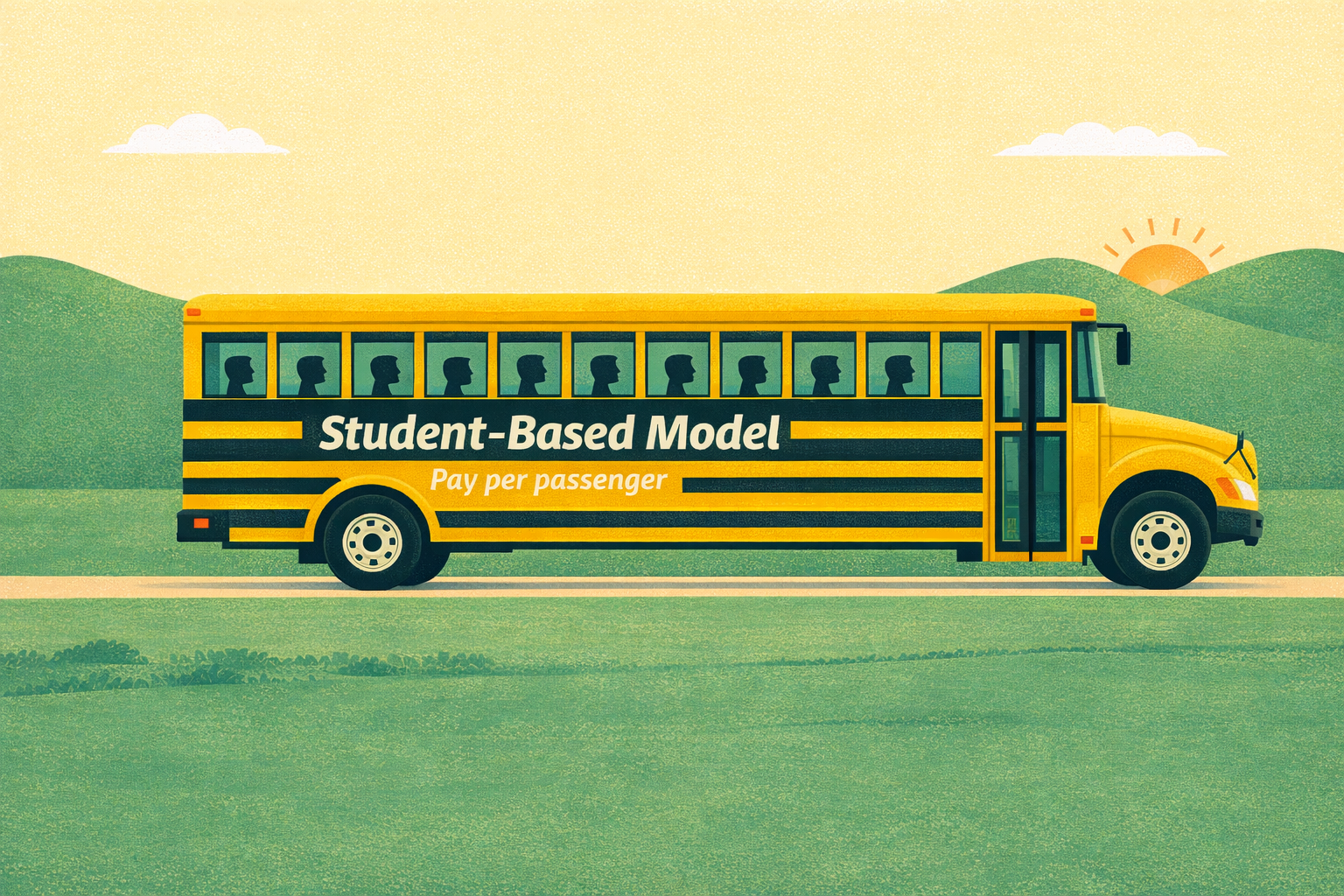
In a student-based funding model, districts receive specific amounts of funding for each enrolled student. (Want to know more about how districts measure enrollment? Check out our Q&A about attendance data.)
If we were planning a field trip, student-based funding would be like the state paying a set amount for each child on the bus. All children would receive the same a amount of funding in the student-based model. A total of 34 states, Washington D.C. public schools, and soon to be VT operate with a student-based model. (Check out our interactive map that shows state funding models.
Resource-Based Funding Model
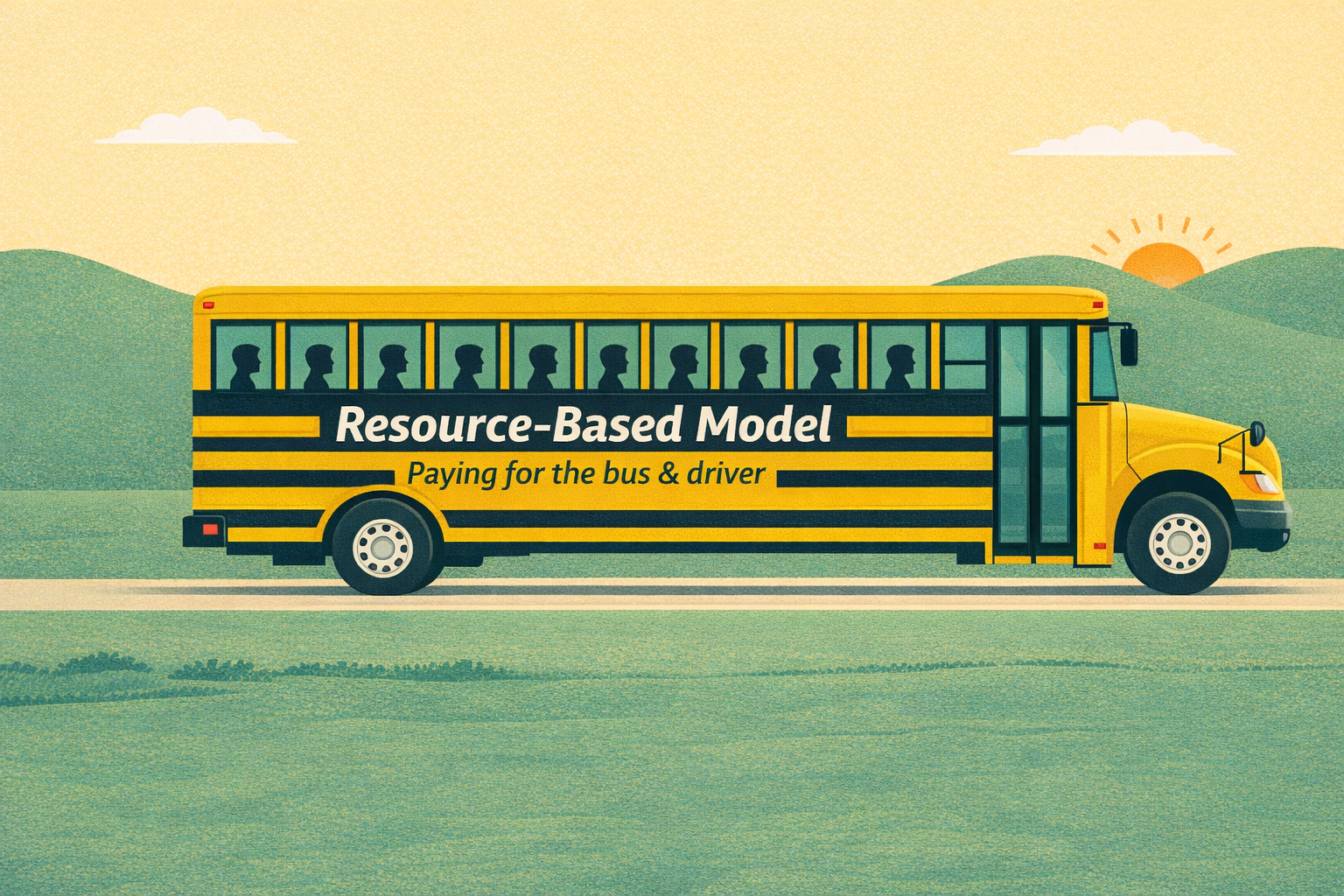
A resource-based model is where a district receives a funding amount based on the minimum resources needed to operate the system at a target level. Often these are built on student-to-staff ratios. For example, a school district may receive the funding needed to pay a teacher’s salary for every 20 students enrolled. These base ratios may be adjusted, such as providing funding for a teacher’s salary for every 15 Kindergarteners and every 22 high schoolers, or supplemented, such as providing funding for an additional teacher’s salary for every 8 students who also receive special education services.
For our field trip analogy, this would be like the state providing funding for one bus and one bus driver for every 40 children going on the field trip. The state may wish to adjust this ratio, such as lowering the ratio to 30 children for high schoolers, for whom it may be a tighter squeeze. Or the state may use a different ratio to supplement funding, providing funding equal to half a bus and driver for every 20 students coming from a long distance, accounting for the cost of extra gas, and ensuring everyone has the resources to arrive on time.
A total of nine states use a resource-based mode—see which ones on our interactive map.
Hybrid-Funding Model
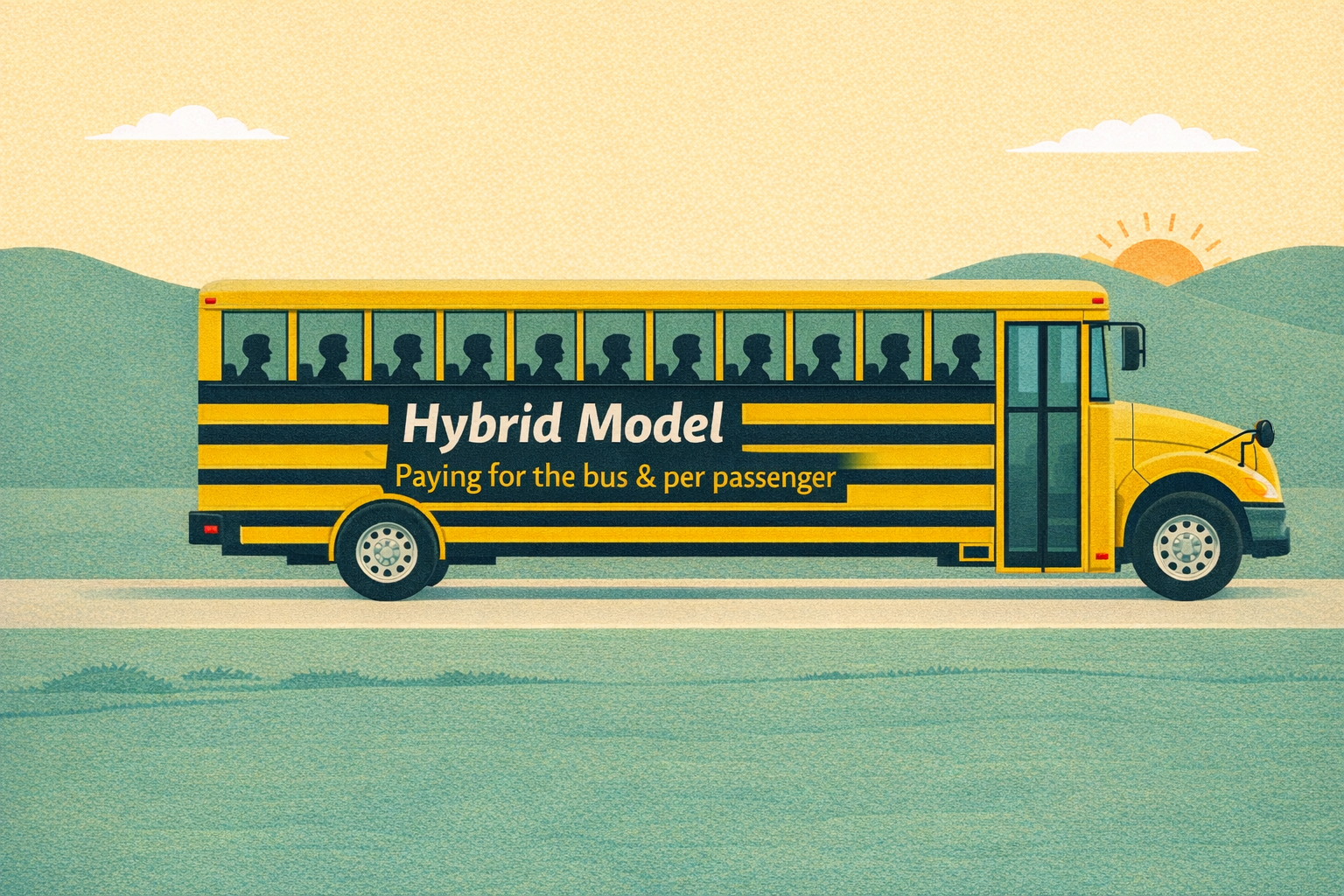
Four states currently use a hybrid model, which use a combination of student- and resource-based funding to cover per-student and operational costs.
This would be like the state deciding how much the field trip should cost using resource-based ratios and then distributing the funds on a per-child basis, as though it were a student-based model.
Unique Funding Models
Not all states have models that fall into one of these three categories. For example, Wisconsin caps the amount each district can raise from state aid and local property taxes unless voters approve additional spending. This approach reduces funding gaps among districts by helping lower-property-value districts raise revenue similar to wealthier ones, while keeping taxes fair and allowing voter-approved increases above the cap.
How Supplemental Funding Fits with Base Funding Models
In reality, we know that some students need different or additional support to make the most of their education. In our field trip analogy, this could include a pre-packaged breakfast to account for an early departure, special equipment to ride the bus, or a specially trained chaperone to keep the student safe while on the trip. Resources to cover these additional supports are often provided through a variety of supplemental funding mechanisms that vary by state and by student need (Read more about Supplemental Funding.)
No matter which approach we take to pay for this hypothetical field trip, it can get complicated. We have to consider:
- How do we know how much money a student needs to go on the trip?
- How can we make sure we have enough funding to pay for everyone to go on the trip?
- What support do students need to get the most out of the field trip?
- What if some students want to go on a different field trip altogether?
Just imagine how complicated it would be if we were actually using one of these models to fund education for an entire district—or a whole state?!
Even though these funding models fit into a few main categories, each state has its own details and rules built into its funding formula. While our funding map can highlight some of that nuance, our ongoing Q&A sessions with various states can help describe the details around how states fund public education. If there are specific questions you need answered or topics you’d like to see discussed, please email us !
Enjoy the trip!