Blog
Michigan’s approach to resource distribution begins with a central idea: student success is most effectively supported when schools have sufficient and strategically aligned resources that are accessible to everyone. This includes organizational capacity to implement selected strategies with fidelity.
| Federal Requirement | Michigan Action | Context | Outcome |
|---|---|---|---|
|
|
|
|
|
|
|
|
Integrating Resource Inquiry Within Continuous Improvement
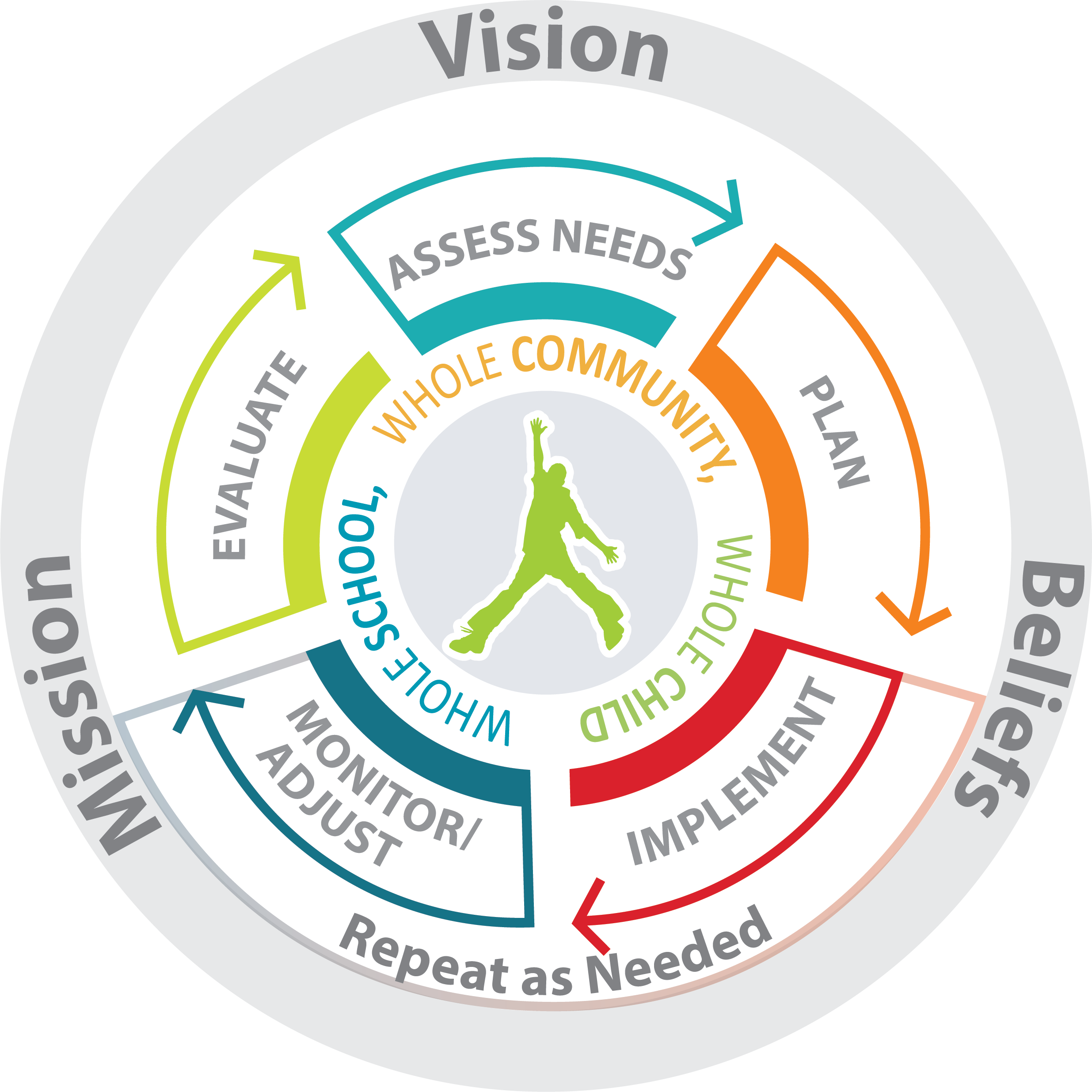
A distinguishing feature of Michigan’s model is the intentional integration of resource considerations within the Michigan Integrated Continuous Improvement Process (MICIP). Each step of the resource allocation review aligns with MICIP’s improvement cycle: assessing needs, examining resources, identifying inequities, addressing concerns, implementing strategies, monitoring progress, adjust, then evaluating the outcome and student impact. Districts are encouraged to include resource exploration within existing improvement structures and teams, adding finance, facilities, or human resource representatives when helpful. This alignment strengthens the connection between the resource review and instructional priorities.
Michigan’s Resource Inquiry Unfolds Across Six Linked Phases
Phase One “Setting the Stage”: Districts begin by establishing readiness for the work. Leaders build shared understanding, commit to the process, and verify that the continuous improvement team has the diverse knowledge needed to examine student need, fiscal data, improvement strategies, and other topics. This foundation enables the study to be well informed and focused on the appropriate questions.
Phase Two “Initiating the Inquiry”: The team initiates the examination by reviewing fiscal, program offering, and student outcome data. The MDE provides guidance to explore data from various sources such as the School Index, School-Level Expenditure reports, spending vs. outcome scatterplots, the Title I comparability report, and other locations. A district data analysis protocol guides the improvement team in understanding the integrated academic and fiscal current reality of the school(s) identified for additional support.
Phase Three “Narrowing the Focus”: With understandings gained in the previous phase, teams narrow the inquiry focus by selecting a priority area connected to the accountability status and current improvement plan. The focus may center on a student group associated with the school’s identification, a strategy within MICIP that addresses a root cause, or a broader review of district systems affecting student outcomes. During this phase, teams have flexibility to use Questionnaires to provide a structure with a contextually relevant lens for examining sufficient and appropriate resource allocation and implementation conditions.
Questionnaire selection process:
- To support alignment between the School Index, selected focus area, and investigation process, team members reflect upon the summary statement for each of the fourteen questionnaires currently available and select three that most apply to the school’s context.
- Individuals then confirm their selection by reviewing the accompanying abstract. Small groups share perspectives, compare selections, and come to consensus on possible questionnaire options.
- Each group examines the internal questions to assess fit and feasibility. Then recommends a ranked preference.
- The full team reaches consensus on a single questionnaire to guide the exploration, with the option to refine it by removing non-applicable questions, adding items from other questionnaires, or creating new questions. This refinement ensures the selected questionnaire authentically explores the local reality and becomes the structured protocol used to guide the diagnostic review while maintaining alignment to the School Index indicators and the applied sufficiency and accessibility lens.
Beyond guiding inquiry focus, the questionnaires assist districts in examining evidence-based implementation practices and identifying whether essential elements for appropriate and fair, high-fidelity implementation exist. They also help to surface key infrastructure needs such as staffing, leadership, training, facilities, food service, and transportation that support sustained capacity. In practice, a district may technically have sufficient funding and have allocation misalignment or usage challenges as demonstrated by adequacy differences when students lack access to programs, materials, effective teachers, a guaranteed and viable curriculum, and/or timely interventions. This broader view emphasizes that resource sufficiency and appropriateness begin with an adequate provision of critical resources to generate the environment necessary for learning, followed by the assurance that additional provisions are available and accessed when necessary.
Phase Four “Collaborative Inquiry”: Once a focus is selected and the questionnaire is refined, related data are gathered and prepared for analysis as the team responds to the selected questions. As such, the questionnaire operationalizes the exploration by embedding an analysis protocol and directing what evidence to gather. A formal process based upon the Lipton and Wellman data analysis protocol is a foundational element of the questionnaire to assist the team in determining resource challenge and a causal statement. The questionnaire also provides opportunities to document preliminary determinations of the resource challenge and potential responses; however, these are treated as working hypotheses to be organized and integrated prior to finalizing a causal statement. As patterns emerge, the team uses a structured root-cause analysis, such as a fishbone diagram and/or the Five Whys, to examine underlying factors and guide final causation decisions.
Case Study
During the 2026 identification cycle, state education consultants partnered with a regional ISD/RESA to support a moderately sized district as it conducted a Resource Allocation Review for their schools identified for “additional supports” as part of the ongoing continuous improvement process. The team reviewed data, clarified needs, and explored the questionnaires. The district team, which included representation from each of the schools, central office officials, and others, merged elements from three questionnaires: Teaching Quality & Diversity, Student Supports & Intervention (Tier I), and Student Supports & Intervention (Tier II & III). Using these selections, district and school teams reviewed talent management, instructional, and behavioral data which revealed resource inequities limiting instructional staffing, professional learning access, and critical components for Tier I implementation of Social Emotional Learning (SEL) support. In response, the schools incorporated actions into their continuous improvement plans in alignment with the district improvement initiatives recorded within the MICIP platform. They included implementing needs-based staffing, providing expanded access to aligned job-embedded professional learning, and strengthening SEL infrastructure. Together, these adjustments aim to secure consistent access to high-quality instruction in a safe and supportive environment for each learner, particularly those with significant needs.
Phase Five “Addressing the Challenge”: As the example in the call out box demonstrates, when a resource challenge is identified, the team evaluates options for addressing the situation as an integrated set of actions within the continuous improvement process, resulting in a coherent school and district improvement plan. This includes selecting activities, setting strategy-specific interim progress measures, and establishing routines for monitoring whether the solution generates positive movement. The action becomes part of the district and school improvement plans, reinforcing that the purpose of the RAR is not to produce a financial summary but to improve implementation and support better results for all students consistent with identified student needs.
Phase Six “MICIP Platform Documentation”: The final step is to record the inquiry findings and planned actions in the MICIP platform. Maintaining visibility of resource considerations throughout the implementation and monitoring stages of continuous improvement supports transparency, accountability, and sustainability. Furthermore, it provides teams with the opportunity to adjust their plans and actions as circumstances shift over three to five years.
Intensive District-Level Resource Inquiry (P-RAR)
The Periodic Resource Allocation Review provides intensive support for districts with larger concentrations of identified schools. Instead of a single school-led study, the P-RAR combines the investigation of multiple schools and district-level work with collaboration from the Intermediate School District (ISD)/Regional Education Service Agency (RESA) and the MDE. The state facilitates a data-dialogue using publicly available information such as the School Index and School-Level Expenditure Report to help teams understand district-level patterns. Participants typically include district improvement leaders, finance and human resource staff, school leaders, ISD/RESA representatives, and members representing students, families, and communities. This discussion generates multiple questions and lifts the need for further exploration of internal district data points such as building budgets and specific program offerings. Upon identifying district patterns, school leaders determine what and how they will complete a deeper examination of resource allocation specific to the schools identified for additional support guided by the protocols above. Each school-level team completes the RAR and brings their findings and suggested resolution back to the district team. State officials facilitate a subsequent data dialogue to understand the challenges of individual buildings and develop a cohesive plan to address each need. This approach ensures that districts exploring complex resource challenges or misalignments include school voice when developing a streamlined plan to address resource needs across the district.
Adequacy, Access, and Strategy Fidelity
A notable development in Michigan’s approach is the growing emphasis on establishing a strong implementation structure to sustain capacity. MICIP guidance stresses that a strategy cannot be effective without the necessary people, time, training, and systems supporting it. The Resource Compass Companion Guide reinforces this by prompting teams to identify roles, qualifications, time requirements, and other system requirements essential for fidelity. Within this framework, adequacy is embedded in the discussion and intentionally shifts the conversation from, “How much money is available?” to “Does the system have what is needed to implement with fidelity and support each learner’s needs?” It encourages districts to examine how student needs are connected to evidence-based strategies, identify implementation requirements, compare those requirements with available resources, determine gaps, and create actions to address those gaps. With this knowledge district leaders can leverage frameworks such as the Government Finance Officers Association’s (GFOA) Smarter School Spending Framework to build what Education Resource Strategies (ERS) calls a Design-Based Budget for providing adequate resources that are distributed appropriately and with sustainability. This sequence makes clear how resource decisions shape implementation quality and influence student outcomes.
Leadership Insights for Resourcing and High-Quality Implementation
Michigan’s model offers several lessons for state and district leaders.
- Resource reviews are most effective when linked directly to improvement plans and the School Index, this keeps the diagnostic review grounded in existing priorities.
- Studying how resources are used is as important as studying how they are deployed.
- Multiple forms of evidence such as student data, fiscal information, talent management, stakeholder insights, and implementation documentation establish a comprehensive base of evidence.
- Understanding sufficient and appropriate resource allocation requires examining whether students with different needs have access to opportunities and materials dependent for success, not simply whether schools receive equal amounts.
- Reviews should lead to action, with clear steps for monitoring whether changes improve implementation and student outcomes. When embedding resource consideration into the continuous improvement process, educational leaders reinforce the essential organizational structures and support that sustain appropriate and fair implementation across multiple years.
Michigan’s Resource Allocation Review model shows how weaving resource allocation, resource use, implementation capacity, and student outcomes into a continuous improvement framework, the state supports districts in making informed and reasonable decisions. The inclusion of resource consideration within the Michigan Continuous Improvement Process (MICIP) provides universal structure and guidance for all districts and schools. The resource allocation review process guides individual schools identified for additional support through a comprehensive examination, while the P-RAR extends support through a collaborative state/district partnership for districts serving a significant number of schools identified for additional support. The core insight is straightforward: improvement strategies cannot be separated from the resources and requirements necessary for execution. When states and districts treat adequate and appropriate resource allocation as an integral part of improvement, they strengthen the capacity to make decisions that support effective, sustainable change. Essential questions for district and school leaders to consider include, “Do I have sufficient and appropriately aligned resources to implement the strategy selected to meet the needs of my students?” and “Does the system enable us to assign those resources where they are needed?” If the answer is no to either question, the team is charged with asking, “What do I need to do differently?”